About

Add New About Item
Edit About Item
“Photography is a medium of formidable contradictions. It is both ridiculously easy and almost impossibly difficult.”
— Edward Steichen (or Martin Parr… apparently it depends on what sort of day Google is having)
Ridiculously easy. A camera really only needs to know two things: how much light to let in (aperture), and for how long (shutter speed). With that knowledge, anyone should be able to pick up a camera and instantly become a pro.
Well… not quite.
By that logic, anyone can turn on an oven, throw in some food, and become a gourmet chef. If only life (and dinner) were that simple.
A camera lens needs to be focused—easy enough. Then there’s metering modes-not too difficult, ISO -the what now?, autofocus vs manual, exposure bracketing, backlighting, vibration reduction, focus shifting… the list goes on. The good news is that most of this can be learned from a couple of YouTube tutorials and a strong cup of coffee.
Back in the days of analogue film, things were… character-building. You’d twiddle a few knobs, take some photos, use up the rest of the roll on taking photos of the cat, send it off, wait a week, and finally get your results back—by which point you’d completely forgotten what you did and why. It was less “workflow” and more “hope for the best.”
Digital photography has made life much easier. So why does Steichen’s “impossibly difficult” still ring true?
Not long ago, a fellow aviation enthusiast told me his camera “just didn’t take very good photos” and he was thinking of upgrading. I resisted the overwhelming urge to say, “Cameras don’t take good photos—photographers do,” mainly because people who say things like that are deeply annoying.
Instead, while we stood in dreadful weather waiting for aircraft that may or may not appear, I offered to check his settings. He’d invested in a massive zoom lens but hadn’t realised it needed a faster shutter speed. His ISO was too low to compensate, and don’t even get me started on the aperture.
But in my opinion, he’d already done the hard part of photography. He’d driven overnight from Norfolk to Gloucestershire, in miserable weather, on the optimistic belief he might capture something spectacular. He had done the easy bit—learning how his camera works.
And that, for me, is the essence of photography.
The hard part is getting out of bed at stupid o’clock, skipping breakfast, travelling miles, or returning to the same location for the tenth time because you know it can be better. The easy part? Pressing the button.
As photographers—especially those trying to sell images to people who didn’t ask for them in the first place—we have to be eternally optimistic. You research a location, look at all the stunning images online (no one ever shows the 99% that ended up in the Recycle Bin), and imagine the shot. Then you get there… and it’s not quite right.
Occasionally, it’s better. Usually, it’s not what you had in mind.
For me, the “impossibly difficult” part is everything you can’t control: people wandering into frame, the sun hiding (or appearing in entirely the wrong place), not enough snow, too much snow, no clouds, too many clouds… and so on. Yet somehow, we convince ourselves it’ll be perfect next time.
If I could give one piece of advice to any budding photographer, it would be this:
Always have your camera ready.
You’ll never capture a great spontaneous moment if your camera is buried in your bag with the lens cap firmly attached.
Side note: my aviation friend and I waited two hours in the rain and saw absolutely nothing. We got soaked. But there will always be another time.
Edit Section
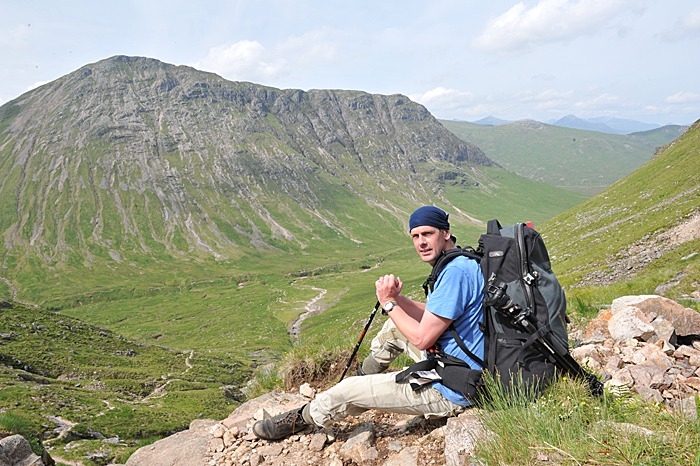
Rob Armitage is a South West of the United Kingdom based Landscape Photographer in the visually stunning Cotswolds.
Specializing in high resolution panoramic and aerial photography from around The Globe.
Every single image you see is uniquely my own work. Many locations have been visited by various Landscape Photographers through the ages, but all the images on this site have all been taken by myself and are all my own work"